The Posture Strength Program: Training the Muscles That Hold You Up
Posture advice fails when it’s all reminders and no horsepower — the slumped shoulders aren’t a memory problem, they’re a strength imbalance — and the fix is training the muscles that hold you up until upright is effortless. The posture strength program.

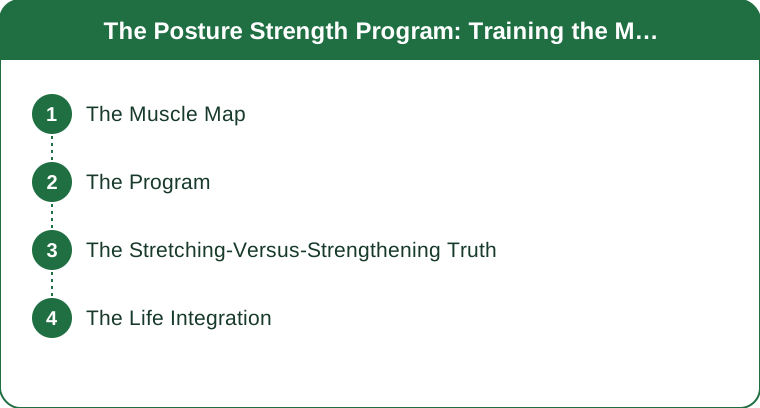
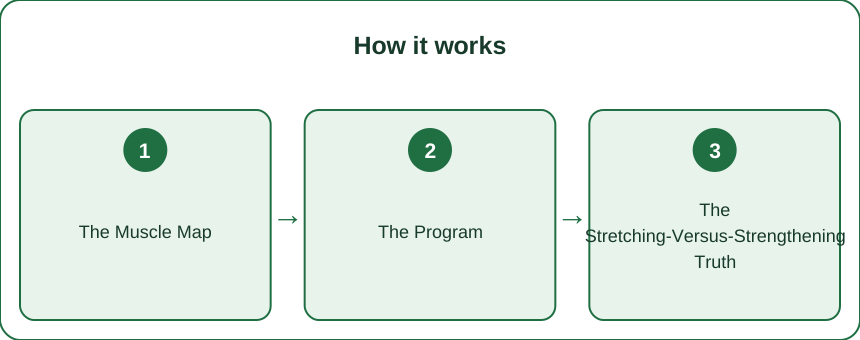
The Muscle Map
Who holds you up: the upper-back battalion (the mid-and-lower trapezius and rhomboids — the shoulder-blade retractors that desk life atrophies; the rounded-shoulders pattern being their weakness made visible per the rounded-shoulders doctrine), the deep-neck front (the deep neck flexors — the head-position muscles that tech-neck bypasses; the chin-tuck muscles from the tech-neck doctrine), the core cylinder (the trunk stabilizers from the core doctrine — the anti-slump endurance more than the six-pack), the glute foundation (the hip extensors that hold the pelvis — the sitting-deadened glutes from the glute doctrine tilting everything above), the counterparts honesty (the TIGHT front — the chest and hip flexors shortened by sitting; the strength-AND-length equation previewed), and the imbalance model (the posture being a tug-of-war the front is winning — the program’s logic: strengthen the back team, lengthen the front team per the balance doctrine).
The Program
The twice-weekly session: the band pull-apart anchor (the posture program’s signature move — the 2x15 daily-ish dose; the desk-drawer band from the desk doctrine; the shoulder-blades-together squeeze held a beat), the row family (the loaded retraining — the dumbbell and cable rows at 2-to-1 over pushing per the ratio doctrine; the chest-supported variants that isolate honestly), the face pulls (the rear-delt-and-rotator move — the high-pull-to-face pattern; the posture trifecta completed with pull-aparts and rows), the chin-tuck progression (the deep-neck-flexor training from the tech-neck doctrine — the wall drills to loaded holds), the core-and-glute block (the planks, dead bugs and bridges from the respective doctrines — the holding-up endurance built at trunk and hips), the front-team lengthening (the doorway chest stretch and the couch-stretch hip-flexor work — the strength paired with length; the thoracic extension over the foam roller from the spine doctrine), and the session shape (the 25-minute standard — the two weekly sessions plus the daily pull-apart snack; the minimal doctrine’s posture wing).

The Stretching-Versus-Strengthening Truth
The evidence sorted: the stretching-alone failure (the tight-chest stretched without back strength reverting by lunch — the length without the horsepower to use it; the classic posture-program mistake), the strengthening-alone gap (the strong-but-short front still winning the tug-of-war — the both-and requirement), the endurance emphasis (the posture being an all-day ENDURANCE event — the higher-rep and longer-hold programming over max strength; the 15-20 rep and 30-second-hold currencies), the reminder role reframed (the posture cues from the awareness doctrine working ONLY atop capacity — the reminder as the trigger, the strength as the ability; the hourly reset from the desk doctrine finally effective when muscles can comply), the timeline honesty (the strength changes at six-to-eight weeks — the effortless-upright feel being the graduation marker; the photos from the tracking doctrine as proof), and the daily-life integration (the carry habit from the carry doctrine as posture training in disguise — the loaded walks that force tall).
The Life Integration
Beyond the sessions: the desk-environment partnership (the ergonomic setup from the desk doctrine reducing the demand while strength raises the supply — the both-ends attack), the movement-snack synergy (the pull-apart and chin-tuck snacks anchored to meetings per the snack doctrine — the strength dosed through the day), the sleep-posture connection (the night-shift alignment from the sleep doctrine — the pillow engineering that doesn’t undo the day’s work), the confidence dividend (the posture-psychology loop from the confidence doctrine — the upright that feeds back into mood; the strength program as quiet confidence training), the maintenance mode (the built posture kept on one weekly session plus the daily snack — the maintenance doctrine’s economy), and the closing reframe (the posture as a strength quality, trained like one — the reminders retired as the muscles take over; the standing tall that stops being effort and becomes default; the tug-of-war, finally, won by the back team). Pull-aparts daily, rows twice weekly, stretch the front while strengthening the back: the upright, made effortless.
Slumping is a strength imbalance, not a memory problem — train the back team (pull-aparts daily, rows and face pulls twice weekly, chin tucks) while lengthening the chest and hip flexors. Posture is an endurance event: higher reps, longer holds, six-to-eight weeks to effortless.
Keep Reading
This article is for general informational and styling purposes only. Fit, sizing, and product availability may vary.